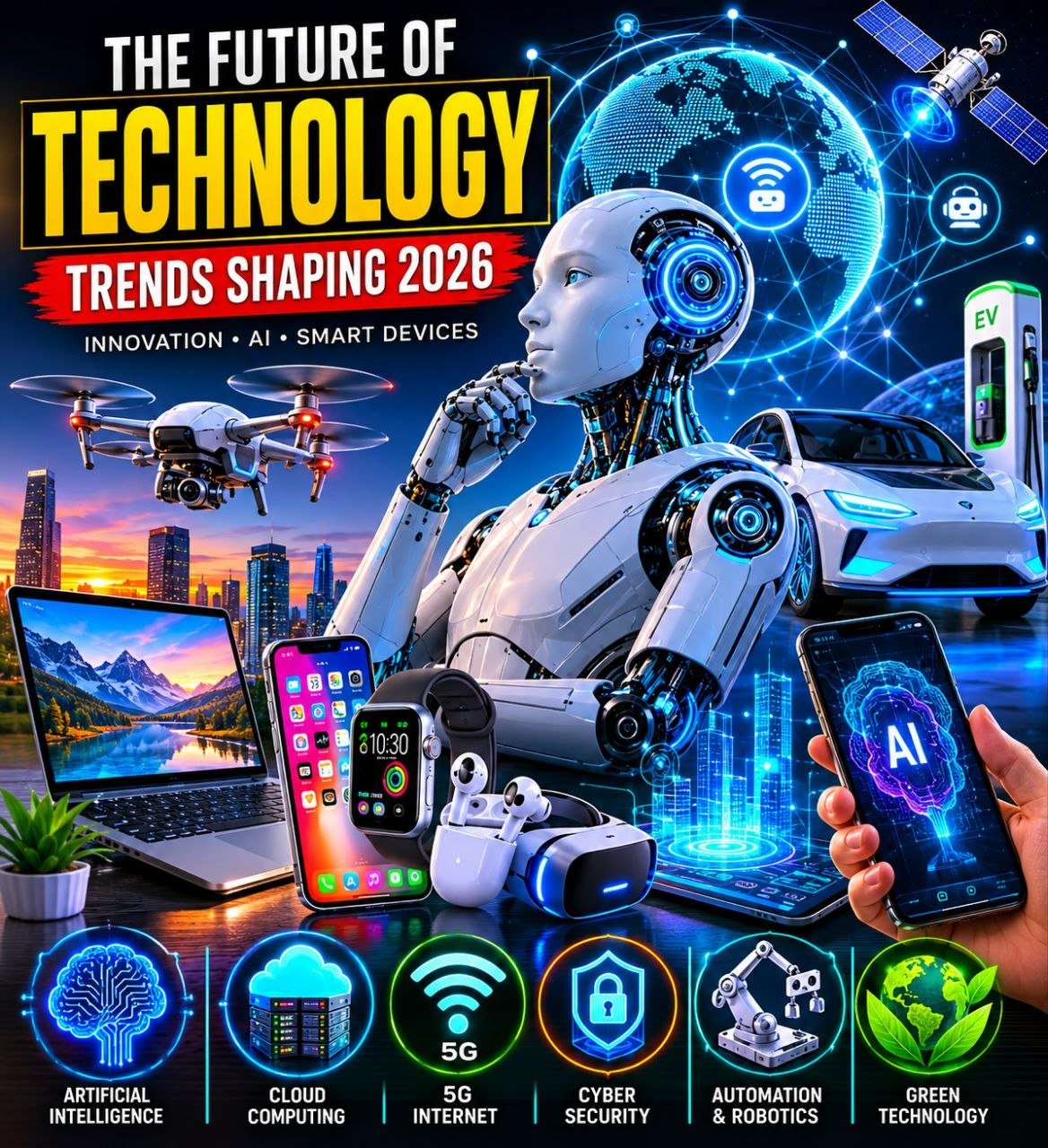
Technology has become an essential part of modern life. From smartphones and artificial intelligence to cloud computing and smart homes, innovation continues to transform the way people work, communicate, and entertain themselves. In 2026, technology is advancing faster than ever, creating new opportunities for businesses and individuals around the world.
Artificial Intelligence is Growing Rapidly
Artificial Intelligence (AI) is one of the most influential technologies today. AI systems can analyze data, answer questions, create content, and even assist businesses in making important decisions. Many companies now use AI-powered tools to improve customer service, automate repetitive tasks, and increase productivity.
Virtual assistants, chatbots, and image generators are becoming more intelligent every year. These technologies help users save time and complete tasks more efficiently. Experts believe AI will continue to expand into healthcare, education, transportation, and many other industries.
The Rise of Smart Devices
Smart devices are becoming increasingly common in homes and workplaces. Smart televisions, security cameras, lighting systems, and home assistants allow users to control appliances remotely using mobile applications.
Many homeowners appreciate smart technology because it improves convenience and security. Motion sensors, automatic locks, and intelligent thermostats help families manage energy consumption while protecting their property.
Wearable devices such as smartwatches are also gaining popularity. These gadgets can monitor heart rates, count steps, and provide health-related information to users throughout the day.
Cloud Computing Benefits Businesses
Cloud computing has revolutionized the way companies store and manage data. Instead of purchasing expensive servers, organizations can use cloud-based platforms to access files and applications through the internet.
Cloud services offer several advantages including:
* Lower operating costs
* Better security options
* Easy file sharing
* Flexible storage capacity
* Faster collaboration between teams
Small businesses particularly benefit from cloud solutions because they can access advanced technologies without investing large amounts of money.
Cybersecurity Remains Important
As digital services continue to expand, cybersecurity has become a major concern. Cybercriminals attempt to steal personal information, financial records, and confidential business data.
Individuals can improve their online safety by following simple practices such as:
* Creating strong passwords
* Using two-factor authentication
* Updating software regularly
* Avoiding suspicious links
* Installing trusted antivirus programs
Businesses are also increasing investments in cybersecurity systems to protect customers and maintain trust.
5G Networks Improve Connectivity
The introduction of 5G technology provides faster internet speeds and more reliable connections compared to previous generations.
Benefits of 5G networks include:
* High-quality video streaming
* Reduced latency for online gaming
* Improved remote work experiences
* Better communication between smart devices
* Enhanced support for autonomous vehicles
As 5G infrastructure expands globally, more users will experience improved internet performance.
The Future of Electric Vehicles
Electric vehicles are becoming an important part of the transportation industry. Many automobile manufacturers are investing heavily in battery technology and sustainable energy solutions.
Electric cars produce fewer emissions than traditional gasoline-powered vehicles, helping reduce environmental pollution.
Governments in several countries are encouraging the use of electric vehicles by offering incentives and developing charging station networks.
Experts predict that electric transportation will continue growing over the next decade as battery efficiency improves and production costs decrease.
Technology in Education
Educational institutions are using technology to create better learning experiences for students.
Online courses, virtual classrooms, and interactive learning platforms allow students to study from almost anywhere in the world.
Teachers can use digital tools to share lessons, monitor student progress, and communicate effectively with parents.
Technology also helps learners access educational resources instantly, making knowledge more available than ever before.
Conclusion
Technology continues to shape the future of society. Artificial intelligence, cloud computing, cybersecurity, smart devices, and advanced communication networks are changing the way people live and work.
Although challenges remain, innovation provides countless opportunities for improving healthcare, education, transportation, and business operations. Staying informed about technological developments can help individuals and organizations adapt successfully to an increasingly digital world.
As technology evolves, those who embrace learning and innovation will be better prepared for the opportunities and challenges of tomorrow.